
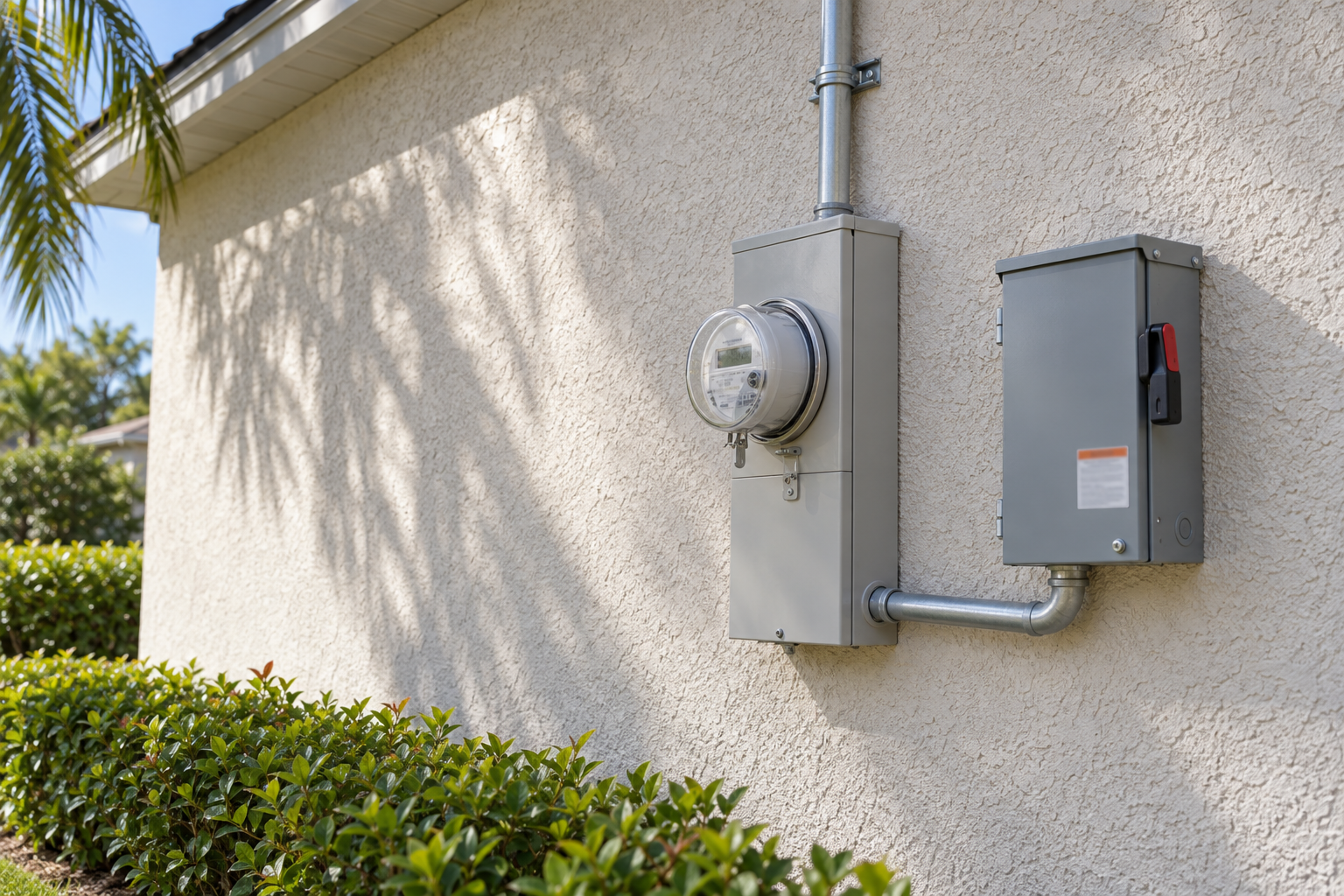
Utility electric meter on a stucco wall beside a solar disconnect switch

How Net Metering Credits Solar Power in Palm Beach Gardens

When your panels make more power than the house uses, the surplus goes out to the grid and comes back as a credit on your bill. Here is how those credits work, and what has to happen before they start.

Free, no-obligation estimates. (561) 813-7536, Monday to Saturday, 7 am to 6 pm.

Call with your power bill in hand.

Call for a Free Estimate

Net Metering Defined

Net metering is the arrangement in which the utility credits you for the surplus power your solar panel system sends to the grid.

Owners call it "selling power back", "bill credits" or "running the meter backward". The trade's word is "net metering": the meter counts the power you draw from the grid and the power your panels send out, and you are billed on the difference. The U.S. Department of Energy's Homeowner's Guide to Solar puts it among the first things to understand before going solar.

How Solar Bill Credits Offset Night-Time Use

Surplus power your panels export is taken off this month's bill, and whatever the bill doesn't absorb is carried as a credit toward a later one.

That is what lets a grid-tied home lean on the grid after dark: the credits earned at midday pay for the power drawn at night. The terms vary by utility, and FPL Net Metering sets out how the credit is applied to the monthly bill.

Midday

The panels make more than the house is using.

Export

The surplus flows out through the meter to the grid.

Your bill

It comes off this bill, or waits as a credit for the next.
Interconnection and Permission to Operate

Credits start only after the inspection passes, the interconnection application is approved, the meter is exchanged and the utility gives permission to operate.

The steps before credits begin are listed below in order.

  1. Inspection

    The finished system is inspected first, and nothing past this point moves until it passes.

  2. Interconnection application

    Once the inspection passes, the installer files the utility's "interconnection" application, the step owners know as hooking up to the grid.

  3. Meter exchange

    The installer arranges a meter exchange with the utility, and the new meter counts power both ways: in from the grid and out from the panels.

  4. Permission to operate

    The utility's sign-off, "permission to operate" or PTO, authorizes the system to run, and the credits start from there.

Sizing a System Around the Power Bill

Because the credits from sunny hours offset what the house uses later, a grid-tied system is sized around your household's power bill, not around the most panels the roof will hold.

"Grid-tied solar", what most owners just call regular solar, stays connected to the utility. The grid covers the evening and the credits pay it back, so the target is a system whose yearly output lines up with the power the house actually uses, as the bills show it.

Utility rates rise 4 to 6 percent a year, which is part of what makes owning the system that offsets the bill more attractive over time.

After the switch-on

When the credits don't add up

Most owners see the bill drop once credits start. When it doesn't, or when a battery comes into the picture, these are the answers we give.

Why a Solar Bill Can Stay High

A bill can stay high with solar when the system is undersized for the house, when its output has dropped, or when the utility's fixed charges and your night-time use outweigh the credits.

Low output costs more than it looks: even a 20 percent drop in production costs hundreds of dollars a year, so it should not be dismissed as a monitoring glitch. One malfunctioning panel can lower the whole system's output and push the bill back up. Call with a recent bill and what your monitoring app shows, and we will talk through which of these it is.

Batteries and Net Metering

Yes: a battery can store the surplus for the evening instead of exporting it to the grid, which matters most under "time-of-use" rates, the peak rates some bills charge by the hour.

Shifting the house onto stored power during the expensive hours is how a battery can lower time-of-use charges, and it provides backup power when the grid goes down.

Still have questions about your credits?

Call and ask. The estimate is free and carries no obligation.

Call for a Free Estimate

From our Google listing

Owners on going solar with us

I want to give a huge thumbs-up to the SolarBright Power team! They are incredibly knowledgeable. I had numerous questions about solar options for my small business, and they patiently addressed each one. Their expertise and meticulous approach are exceptional. The installation process went smoothly, and now we're enjoying savings on our energy bills – a win-win situation!
FredGoogle review
I want to give a big shoutout to SolarBright Power for a fantastic job! I have a home-based bakery, and my energy bills were sky-high. Their team installed solar panels seamlessly. My energy costs are down, and I'm reducing my carbon footprint. Baking with sunshine feels even sweeter now!
Marvin LamperGoogle review
I'm impressed with the expertise and dedication of SolarBright Power. They tailored a solar solution to my specific needs and guided me through the entire process. The solar panels are performing exceptionally well, and I'm thrilled with the energy savings.
Ian DennisGoogle review
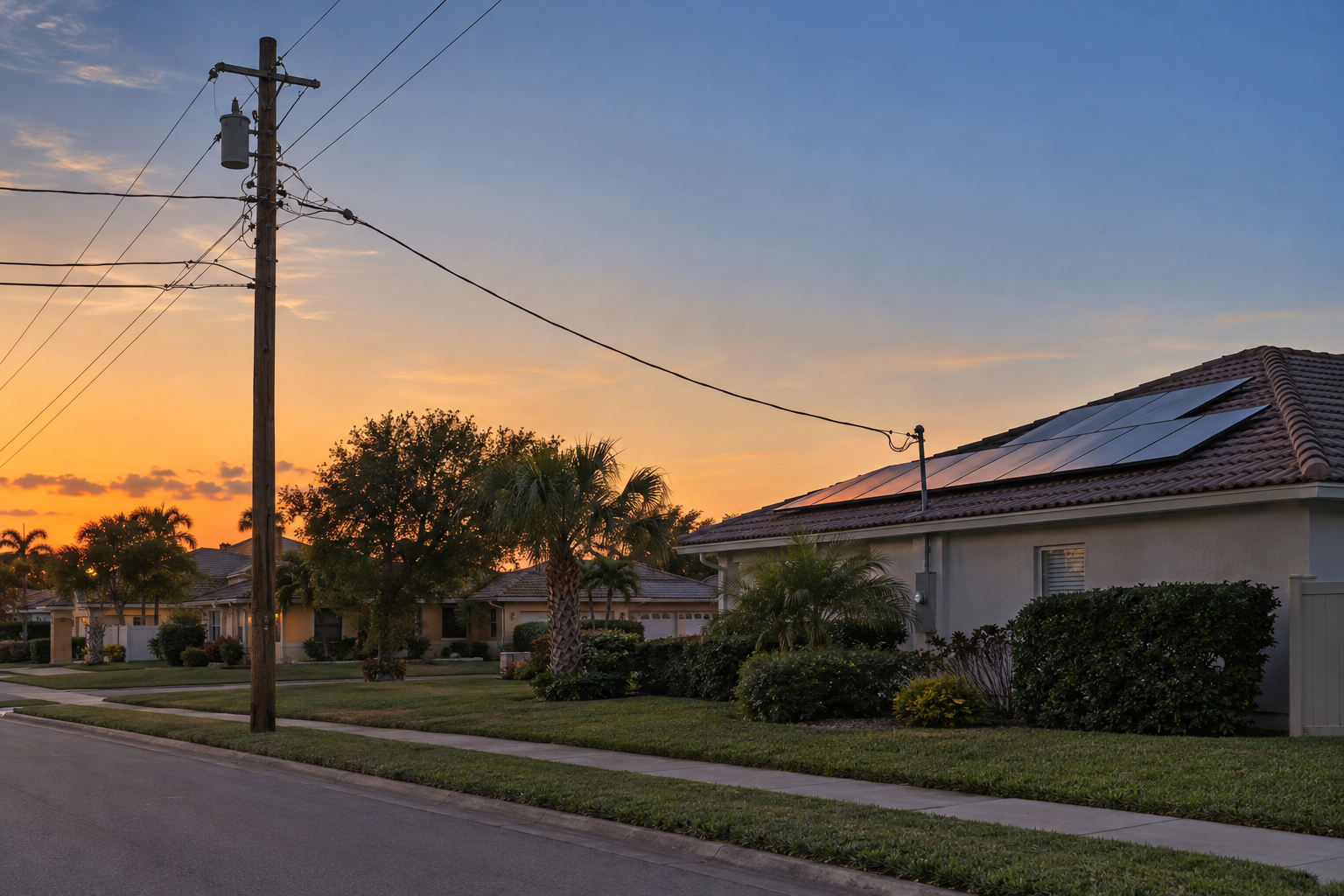
Overhead power lines running from a utility pole to a house with rooftop solar panels at dusk

Questions about your credits or your bill?

Call with a recent power bill and tell us about your roof. We quote the whole job before we start, with no surprise charges after.

Call for a Free Estimate

(561) 813-7536

Monday to Saturday, 7 am to 6 pm. Calls outside those hours go to voicemail and we return them the next working morning.

  • Free, no-obligation estimates
  • We show up when we say we will
  • The whole job quoted before we start
Call (561) 813-7536