How Solar Panels Hold Up to Hurricanes in Palm Beach Gardens
Rooftop solar is built for storm country: the panels are tested against hurricane-force wind and the racking is engineered for it. Here is how a system stands up to a storm, and what to do before the season and after it passes.
Free, no-obligation estimates. We answer the phone or call back the same working day.
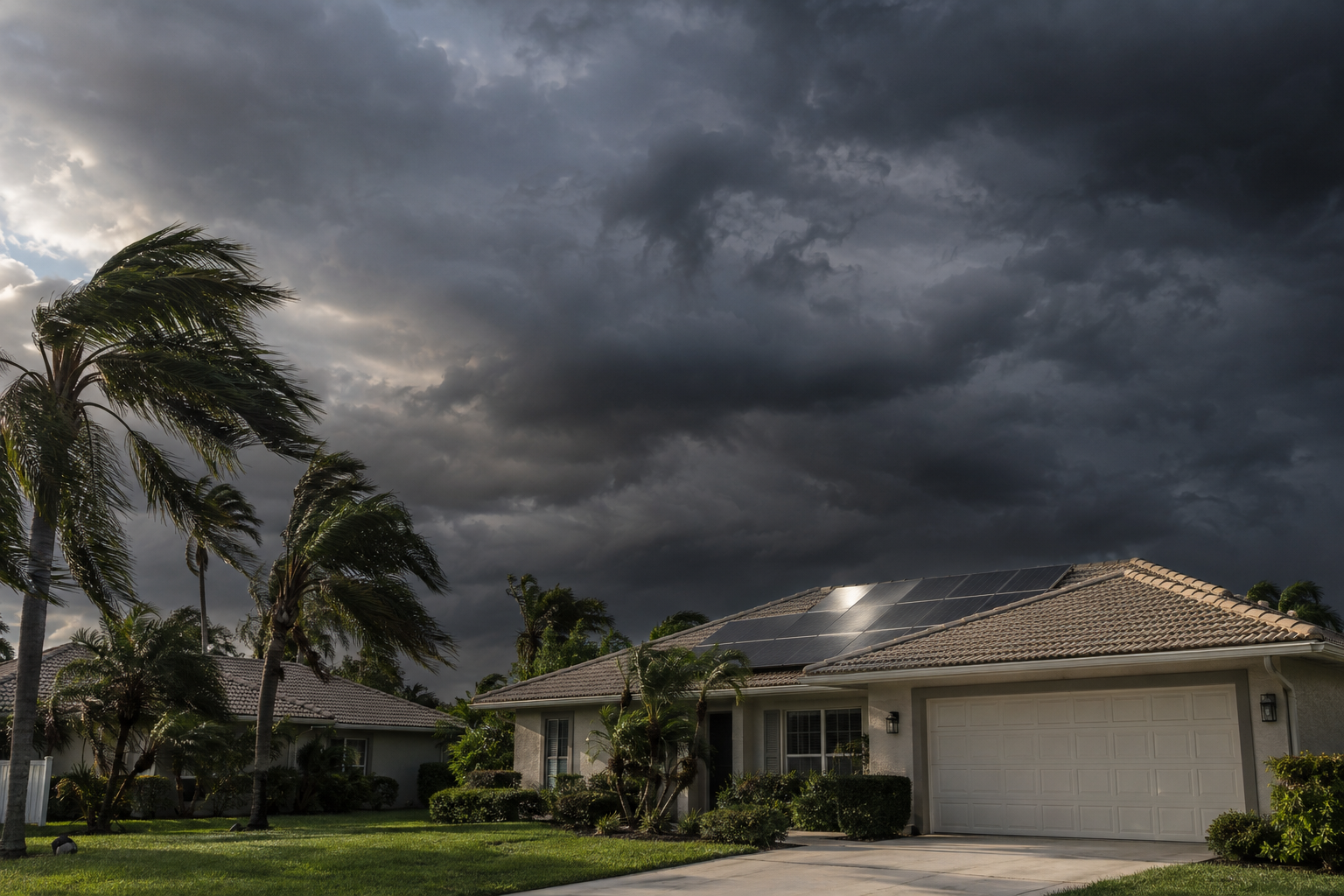
Storm season coming? Ask us about your array.
Call for a Free EstimateHow Solar Panels Are Rated for Hurricane Winds
Panels with impact-resistant glass are tested to withstand winds of 130 mph or more, and the racking and roof attachments that hold them are engineered for the design wind load at the house.
The glass takes the hits from wind-blown debris, and the frame, the rails and the mounts take the pull of the wind, so how the array is tied to the roof matters as much as the panel itself.
Florida keeps its own solar research institute, the Florida Solar Energy Center (FSEC), which runs the state's solar certification and standards.
On paper before it goes on the roof
Hurricane-Rated Racking and Wind-Load Calculations
The permit set carries the wind-load calculations for the array, and the building department checks the truss attachment details before the work is approved.
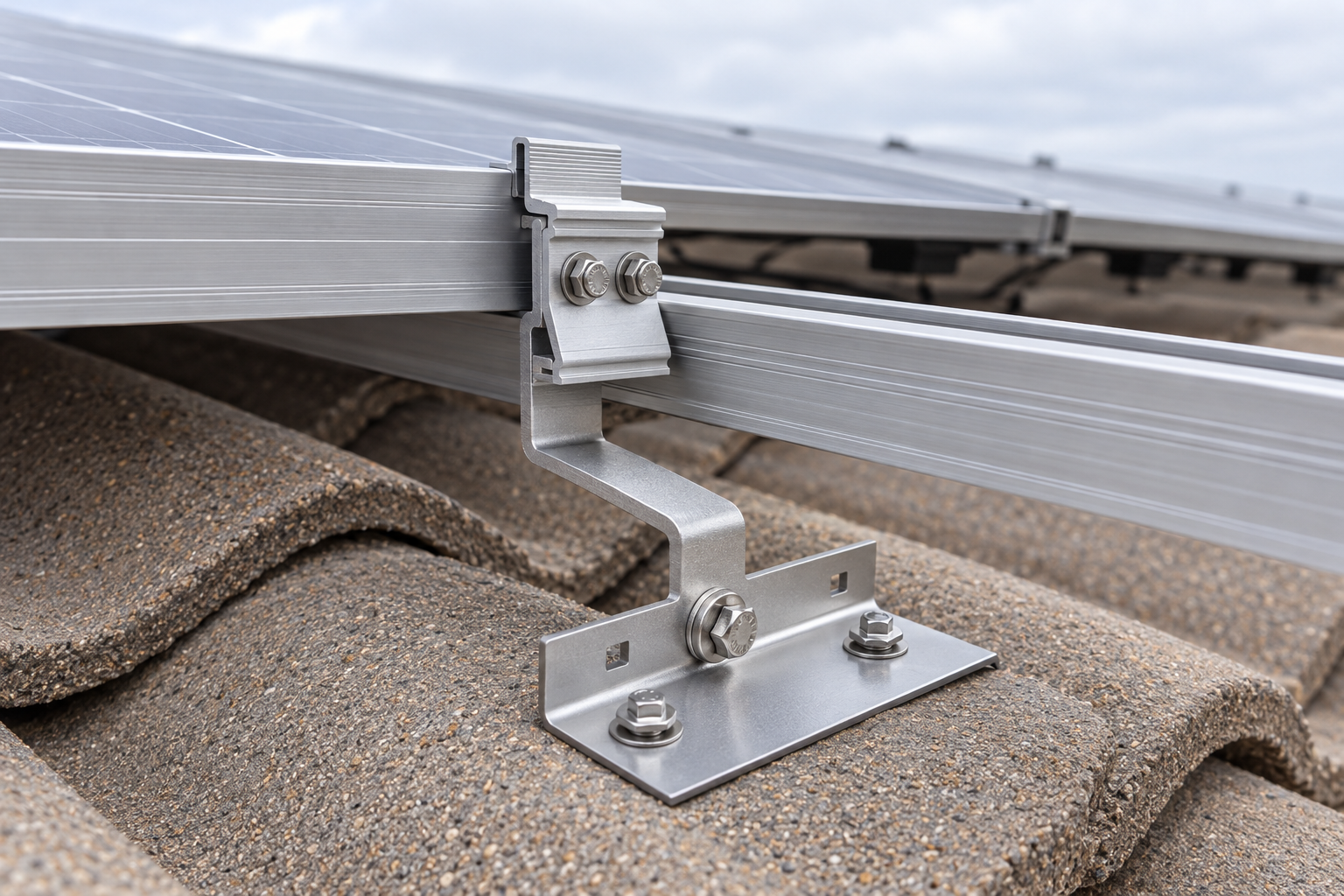
In a storm the wind tries to lift each panel, and that pull runs from the panel clamps into the rails, the "racking", through each attachment and into the roof trusses. Every link in that chain is sized for the design wind load, so the array holds as one piece.
-
In the permit set
Wind-load calculations
The calculations show the design wind load the array has to resist, and the racking layout follows them.
-
At the building department
Truss attachment details
The plans show how far apart the mounts sit and which fasteners hold each one down.
-
At every mount
Flashing
Each "roof penetration" gets flashing, the seal around the bolts, because missing flashing is the main cause of solar roof leaks.
Preparing Solar Panels for Hurricane Season
Your system should be inspected before hurricane season for loose mounts, damaged wiring and weak seals, while there is still time to fix what turns up.
For the rest of the house, Ready.gov, Hurricanes covers getting a home ready for the season and for power outages.
Tell us what is on the roof and when it went up. We quote the whole job before we start.
The checks before hurricane season are listed below.
Racking
Rails and clamps tight, with nothing shifted or corroded.
Roof attachments
Every mount still fastened down, none worked loose since the last storm.
Wiring
Cables clipped up and undamaged, none chafed, cracked or hanging.
Flashing
The seal around the bolts intact at each mount, so wind-driven rain stays out.
Battery charge
A home battery set to charge fully before a forecast storm.
Panel damaged in a storm? Stay clear and call.
Call for a Free EstimateWhen the storm has passed, or the grid is down
After the storm and through the outage
Three questions come up once the wind drops: what to do about the panels, how to keep the lights on, and where the equipment should sit if water rises.
-
Solar Panel Checks After a Storm
You should stay away from any damaged panel and have the system inspected before it runs again.
A damaged panel carries voltages high enough to kill, so don't touch it, hose it off or climb up for a closer look. Call a professional; that is the call we take.
solar panel repair -
Battery Backup Through a Hurricane Outage
A battery can charge to full before the storm and then keep your essential circuits running when the grid goes down.
A "smart panel" manages which household loads the battery carries, so the stored power goes where you need it first.
solar battery installation -
Flood Zones and Equipment Placement
A FEMA flood zone affects where ground-level equipment such as batteries and inverters is placed.
You can look up your address on the FEMA Flood Map Service Center before the equipment's spot on the wall is settled.
From our Google listing
What neighbors say about us
I want to give a huge thumbs-up to the SolarBright Power team! They are incredibly knowledgeable. I had numerous questions about solar options for my small business, and they patiently addressed each one. Their expertise and meticulous approach are exceptional. The installation process went smoothly, and now we're enjoying savings on our energy bills – a win-win situation!
I want to give a big shoutout to SolarBright Power for a fantastic job! I have a home-based bakery, and my energy bills were sky-high. Their team installed solar panels seamlessly. My energy costs are down, and I'm reducing my carbon footprint. Baking with sunshine feels even sweeter now!
I'm impressed with the expertise and dedication of SolarBright Power. They tailored a solar solution to my specific needs and guided me through the entire process. The solar panels are performing exceptionally well, and I'm thrilled with the energy savings.
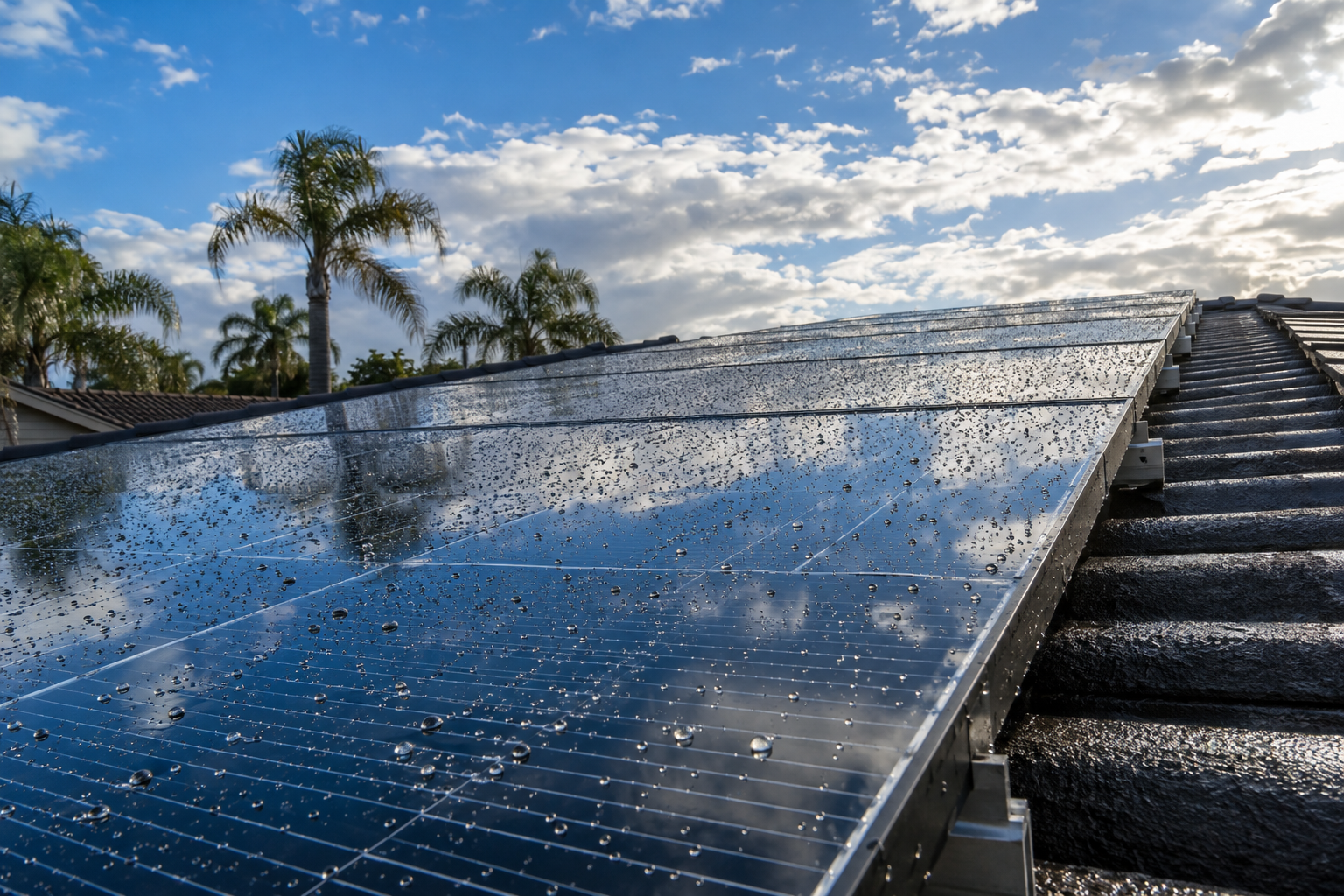
Get your array ready before the next storm
Call and tell us about your roof, your system and whether a battery is in the plan. The estimate is free, and we quote the whole job before we start.
Call for a Free EstimateMonday to Saturday, 7 am to 6 pm. Calls outside those hours go to voicemail and we return them the next working morning.
- Free, no-obligation estimates
- We show up when we say we will
- No surprise charges after