Which Solar Inverter Type Suits a Palm Beach Gardens Home
String, micro or hybrid: the right inverter comes down to how much shade your roof gets, which way it faces and whether a battery is in the plan. Call and we'll match one to your roof.
Free, no-obligation estimates. We answer the phone or call back the same working day.
String, micro or hybrid? We'll match it to your roof.
Call for a Free EstimateWhat a Solar Inverter Does
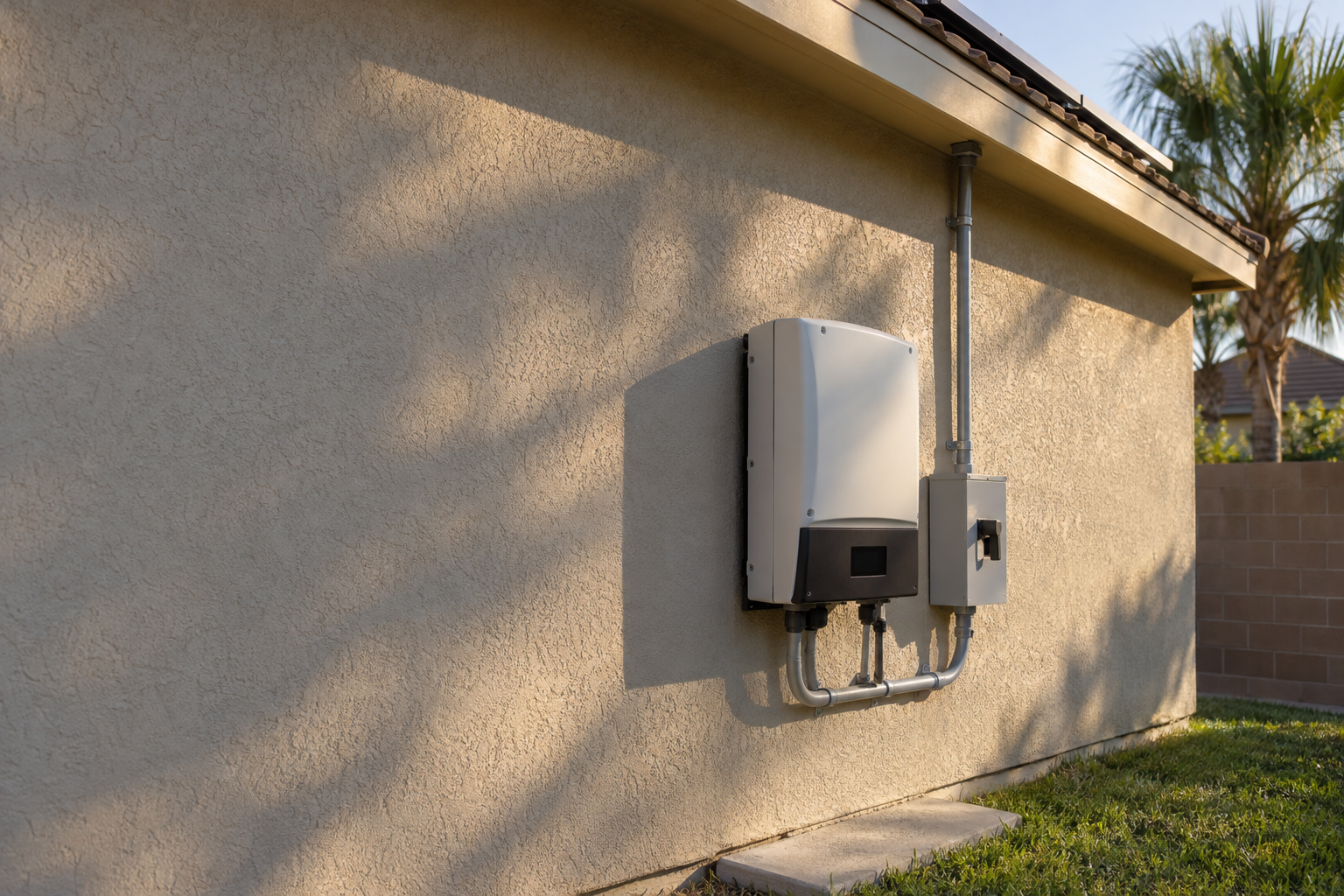
An inverter takes the direct current, "DC", your solar panels make and converts it into the alternating current, "AC", your home runs on. Straight off the roof, panel power is nothing the house can use; the inverter is the step that turns it into electricity for the outlets, the lights and the air conditioning.
That makes it the one part every system needs, and the part that decides how the whole system behaves: whether shade on one panel drags down the others, whether you can see what each panel makes, and whether the system can run a battery.
Power makes three stops on its way to your outlets.
-
On the roof
The panels turn sunlight into direct current.
-
At the inverter
This happens in one box on the wall or in small units under each panel.
-
In the house
From the breaker box it reaches every circuit, and what the house doesn't use goes out to the grid.
String, micro or hybrid
String Inverters, Microinverters and Hybrid Inverters
Home solar systems use one of three inverters: a single string inverter for the whole array, microinverters on each panel, or a hybrid inverter that also runs a battery.
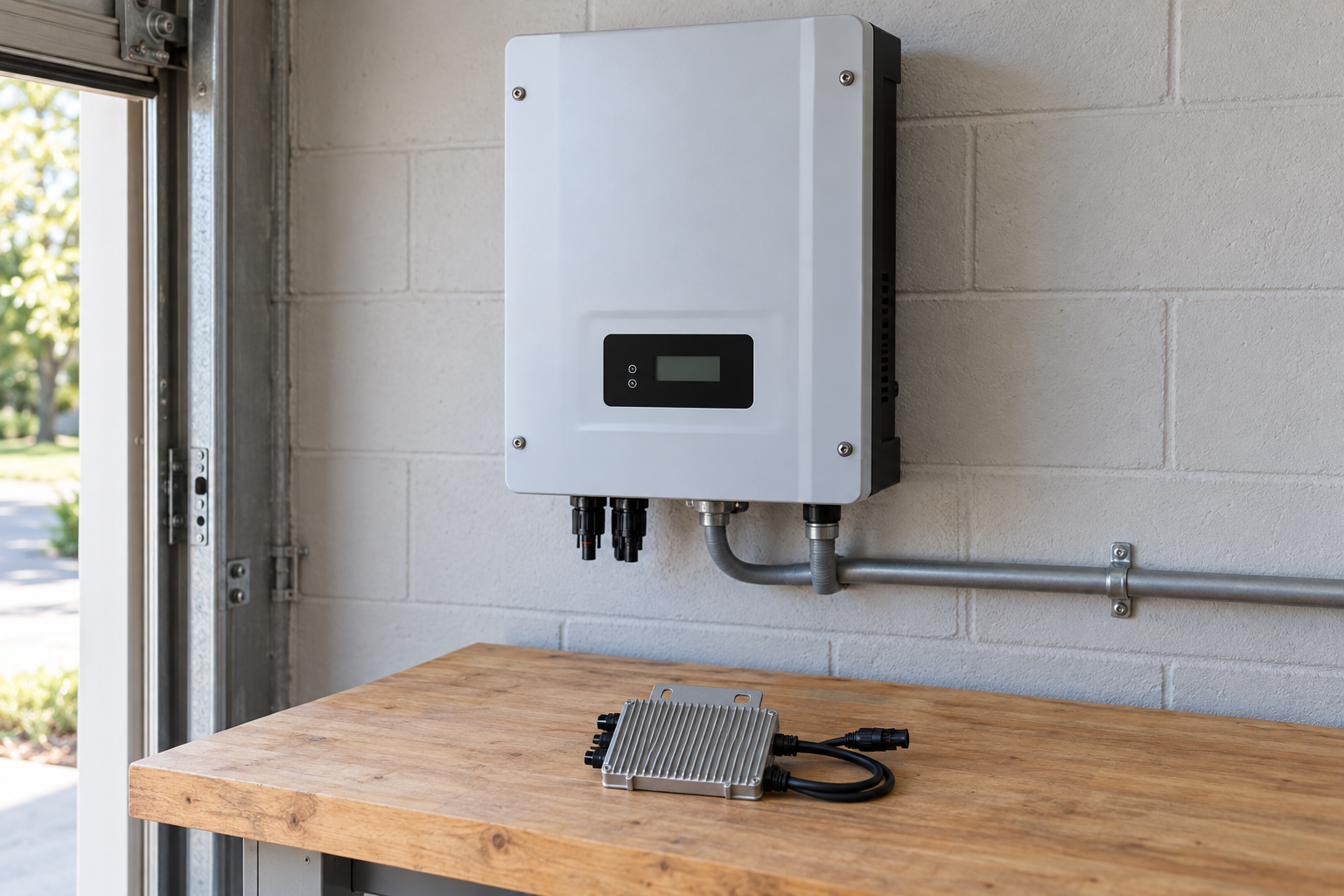
The three inverter types are listed below with how each works.
-
String inverter
One box for the whole roof
The panels are wired together in a series, a "string", and all of their power runs to one central inverter, usually on a wall by the meter or in the garage.
-
Microinverters
The box under each panel
A small inverter, a "microinverter", sits under every panel and converts that panel's power right on the roof. Because each panel works on its own, microinverter systems give you real-time monitoring and optimization panel by panel.
-
Hybrid inverter
Runs the battery too
A hybrid inverter does a string inverter's job and also runs a home battery, so what the panels make can be stored for after dark or an outage instead of going only to the house and the grid.
Inverter Lifespan and How Each Fails
A string inverter typically lasts 10 to 15 years and microinverters last longer, but when a microinverter does fail, it cuts that panel's output without raising any alarm.
Here is how the two compare side by side.
| Inverter type | Typical life | What a failure looks like |
|---|---|---|
| String inverter | 10 to 15 years | The whole system shuts down and the inverter shows an error, so you know right away. |
| Microinverters | Longer than a string inverter | The rest of the array keeps running, and each failed unit silently cuts output by 10 to 25 percent. |
Why monitoring matters
Your production numbers are the only place that drop shows up. The real-time monitoring that comes with a microinverter system is how you catch that quiet drop, so if your production has slipped and you can't see why, call and we'll look.
Inverter showing an error? We'll find out why.
Call for a Free EstimateChoosing an Inverter Type
Microinverters suit a roof with shade or several planes, a string inverter suits a simple roof in full sun, and a home that is adding a battery should look at a hybrid inverter.
Find your roof in one of these three.
-
If your roof has
Shade or several planes
Look atMicroinverters
A palm, a neighbor's oak or a roof that faces more than one way means some panels make less than others. With an inverter on each panel, a shaded panel costs only its own output instead of pulling the whole string down with it.
Call for a Free Estimate -
If your roof is
Simple and in full sun
Look atString inverter
One unshaded roof plane with the panels all facing the same way means every panel sees the same sun, so one central inverter handles them well and keeps the equipment in one place on the wall.
Call for a Free Estimate -
If you are
Adding a battery
Look atHybrid inverter
A hybrid inverter runs the panels and the battery from one unit, so it is the one to look at when backup power for outages is part of the plan.
Call for a Free Estimate
Plenty of roofs don't fit one box, such as a sunny south face with a shaded east face beside it. That is what the free estimate is for: we look at the roof with you, and we quote the whole job before we start, with no surprise charges after.
If you want the long version first, the U.S. Department of Energy's inverter basics explain how shade on one panel affects a string inverter and microinverters differently.
From our Google listing
Neighbors on working with us
I want to give a huge thumbs-up to the SolarBright Power team! They are incredibly knowledgeable. I had numerous questions about solar options for my small business, and they patiently addressed each one. Their expertise and meticulous approach are exceptional. The installation process went smoothly, and now we're enjoying savings on our energy bills – a win-win situation!
I want to give a big shoutout to SolarBright Power for a fantastic job! I have a home-based bakery, and my energy bills were sky-high. Their team installed solar panels seamlessly. My energy costs are down, and I'm reducing my carbon footprint. Baking with sunshine feels even sweeter now!
I'm impressed with the expertise and dedication of SolarBright Power. They tailored a solar solution to my specific needs and guided me through the entire process. The solar panels are performing exceptionally well, and I'm thrilled with the energy savings.
Upgrades and repairs
Once owners know what is on the wall, they usually ask what can be added to it and what happens when it fails. Here are both, in short.
Monitoring, DC Optimizers and Upgrades
Common upgrades include online production monitoring, DC optimizers and higher-efficiency panels, along with more peak kW where the roof has room for it.
The upgrades owners ask about most are listed below.
- Online production monitoring: see what the system is making from your phone or computer.
- DC optimizers, "panel optimizers": panel-level electronics added to improve production.
- Higher-efficiency panels, such as panels built on heterojunction, "HJT", cells.
- More peak kW: a larger system rating, so the array makes more at its best hours.
When an Inverter Needs Repair
A failing inverter shows an error or shuts the system down: its arc fault protection trips when it detects a fault, and the system stops producing until the cause is found. Inverter repair starts by reading those error codes to find the root cause, then inspecting the connections between the inverter, the main service and the panels.
inverter repair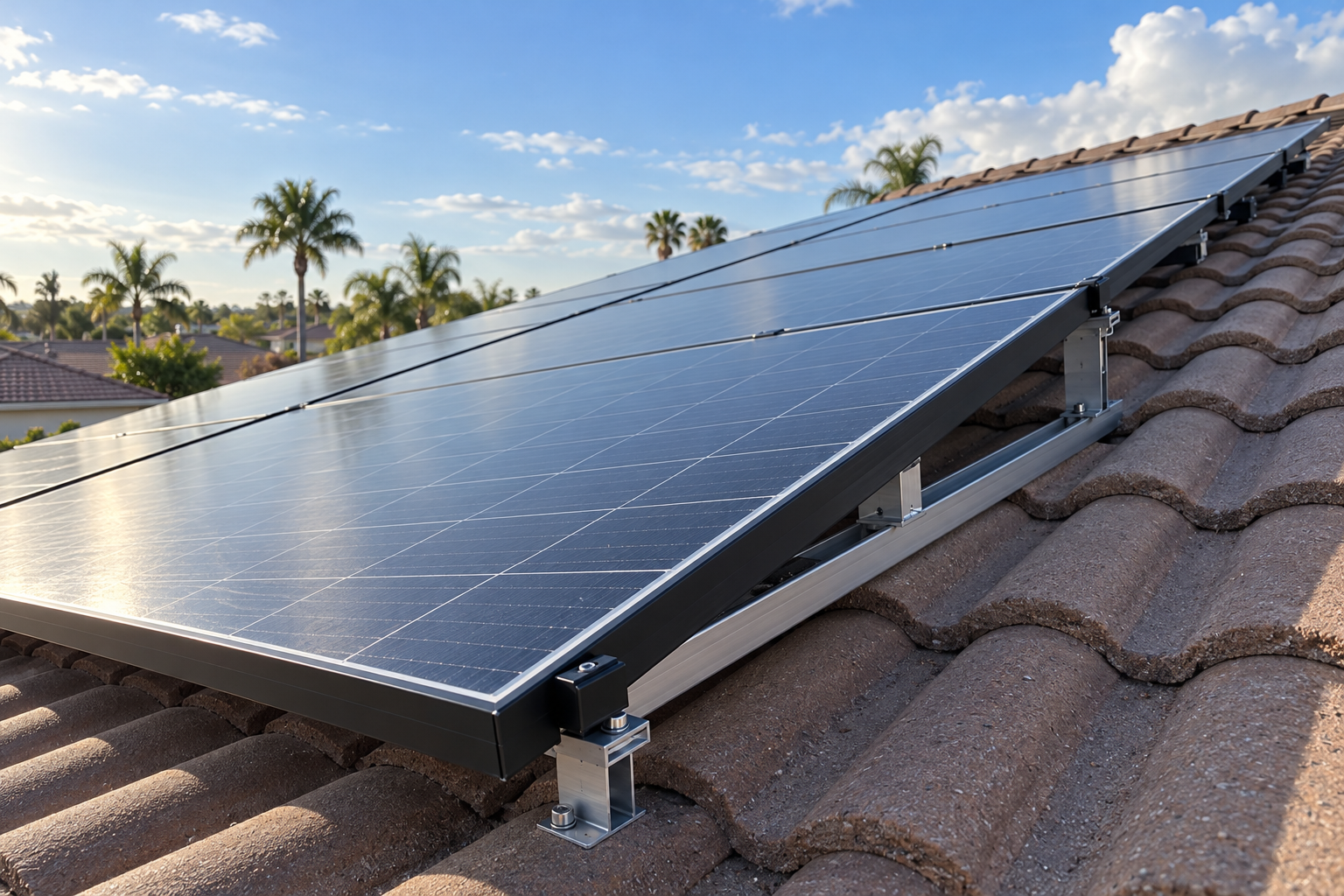
Find out which inverter fits your roof
Call and tell us about the roof, the shade on it and whether a battery is in the plan. The estimate is free, and we quote the whole job before we start.
Call for a Free EstimateMonday to Saturday, 7 am to 6 pm. Calls outside those hours go to voicemail and we return them the next working morning.
- Free, no-obligation estimates
- We show up when we say we will
- No surprise charges after